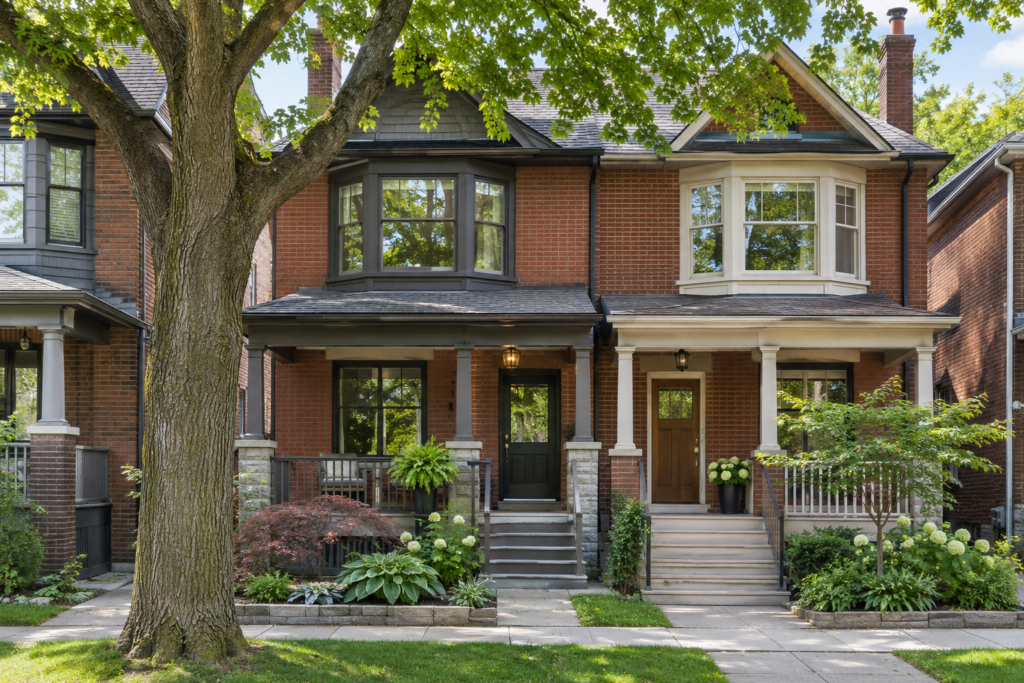
Your Toronto home is worth a likely sale-price range based on what comparable homes have recently sold for, how your property differs from those sales, and what buyers can purchase today. Two similar homes on the same street can sell at different prices because of their condition, layout, lot, parking or timing. To estimate your own range, start with the homes a buyer would realistically consider alongside yours.
How do you estimate what a Toronto home is worth?
Start with recent sold prices, then use active listings to see what buyers can choose from today. A sold price shows what a buyer and seller agreed to. An asking price shows what a seller is seeking. Both matter when you price a home, and they answer different questions.
| What to compare | What it tells you |
|---|---|
| Recent comparable sales | What buyers have paid for homes they could reasonably substitute for yours |
| Active listings | What a buyer can tour this week at a similar price |
| Expired or terminated listings | Which properties left the market without a sale on that listing and warrant a closer look |
| Your home’s condition and features | Where buyers might pay more, ask for a discount or rule the property out |
Start close to home. For a detached or semi-detached property, compare homes with similar layouts, lot characteristics, parking and renovation levels. For a condo, look within the same building first, then compare unit size, floor, exposure, maintenance fees, parking and locker. When recent sales are scarce, widen the search and identify where the comparison becomes weaker.
Why can two homes on the same street sell for different prices?
Picture two Toronto semis with three bedrooms. One has a usable family layout, a driveway and a renovated kitchen. The other has similar square footage but requires immediate work and has limited parking. A buyer may be able to afford either purchase price yet only have the cash and time to take on one of them.
The same logic applies to upgrades. A renovated kitchen can make a property easier to sell, but its value depends on what buyers pay for similar homes with and without that upgrade. The renovation invoice tells you what the work cost. The comparable sales help you judge what buyers might pay for it.
Why do some Toronto homes sell while others sit?
A home can sit because its price puts it in competition with properties that offer more. It can also be hard to show, look less appealing online than it does in person, or have a feature that narrows the pool of buyers. How buyers respond can help you work out where to look first.
- Few showings. Compare the first photo, asking price and showing availability with the strongest competing listings.
- Plenty of showings and no offers. Look for recurring feedback. If buyers keep raising the same issue, compare your price with alternatives that solve it.
- Offers consistently below asking. Review the terms and recent sales alongside the offer prices. Consider whether the original range still holds up against newer evidence.
Here’s a test I’d use before choosing a list price. If a buyer toured only three homes this weekend, would yours make the shortlist at that price? Pull up the two strongest alternatives and compare them side by side. The exercise makes it easier to see what buyers are getting for their money.
What should you do with your valuation range?
Use it to answer two separate questions. First, what sale price is reasonably supported by the evidence? Second, what would you keep after the sale? If you’re moving, the second number helps you plan your next purchase.
For help with that calculation, see How Much Does It Cost to Sell a House in Toronto? and Should You Sell First or Buy First? on the HomeSalePro blog.
Frequently asked questions
Can an online estimate tell me what my Toronto home is worth?
It can give you a starting point. To narrow the range, check the sales it appears to rely on and account for things an estimate may miss, such as layout, renovations, parking and the condition of competing homes.
Should I price my home below market value to attract offers?
Look at whether comparable homes have actually attracted multiple offers and where those homes ended up selling. If buyers have plenty of alternatives, a low list price can draw attention without producing offers at the price you’re prepared to accept.
How often should I update my home valuation?
Revisit it before listing or making a purchase decision that depends on your sale proceeds. A nearby sale or a strong new competing listing can change the range even when the broader market looks steady.
Thinking about selling? Ask me for a home evaluation. I’ll walk you through the comparable sales I’d rely on, the listings you’d compete against and the price range I’d use to plan your move.