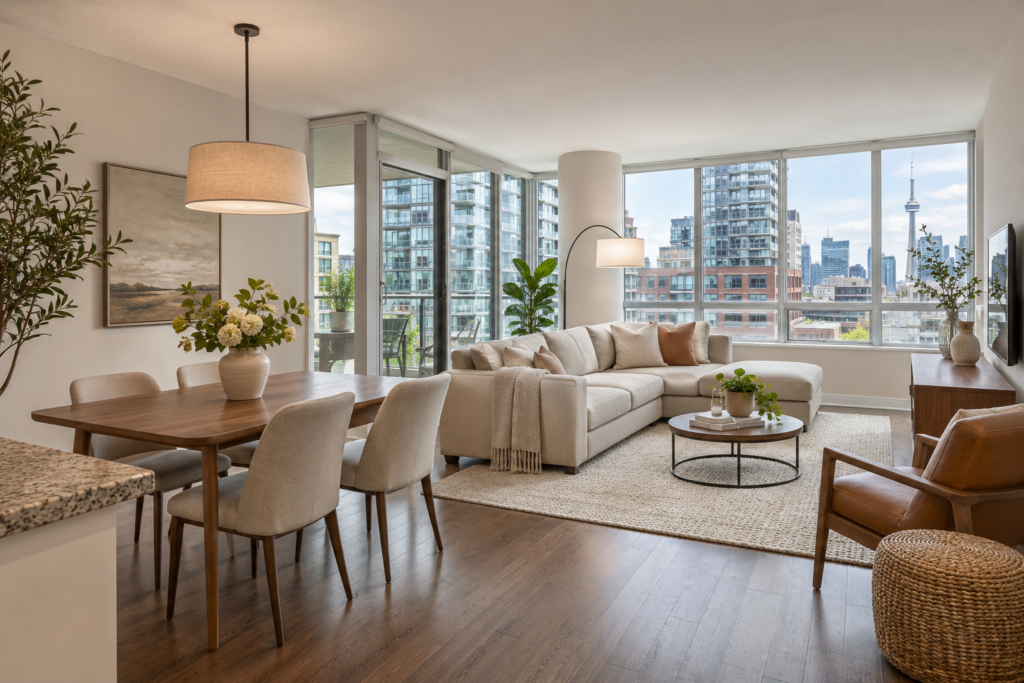
A Toronto resale condo is a good buy when the price holds up against comparable sales, the monthly cost fits your budget, and the unit and building suit how you plan to live. Start with recent sales in the same building. Then compare what the fees include, how much of the floor plan you can actually use, and what the building documents say before you commit.
Start with sold units in the same building
When possible, find units with the same floor plan or a similar layout, then compare floor, exposure, condition, outdoor space, parking and locker. A sold unit that looks similar on paper can be a weak comparison if it has a view, a parking space or a second bedroom that your unit lacks.
If the building has few recent sales, look at nearby condos of similar age, size and amenities. Pay attention to what changes when you cross the street. A quieter exposure, a different walk to transit or fees that cover more of your monthly expenses can change which unit you’d choose.
Compare what you’ll pay each month
Put your estimated mortgage payment, property taxes, condo fees, insurance and utilities on one line for each unit. Check which expenses the condo fees already cover. If the listing says parking or a locker is included, verify what comes with the sale and whether there is any separate cost.
The fee difference can be easy to underestimate. A $150 monthly difference adds up to $1,800 a year before considering future increases or differences in what’s included. If the more expensive unit covers a bill you’d otherwise pay separately, factor that into the comparison. Likewise, ask what you’d pay for parking if the cheaper unit doesn’t come with a space.
Compare usable space while you’re in the unit
Two units with similar square footage can live very differently. A corner unit might give you more windows and less wall space for furniture. A long hallway may take up space you’d rather have in the living room. A den may work for a laptop but have no comfortable place for a desk chair once the door closes.
During the showing, check the things photos rarely settle. Where would the couch go? Can you fit the bed you own and open both closet doors? How much street, hallway or elevator noise can you hear with the windows closed? If the balcony is a big part of the appeal, step outside and see whether it has enough room for how you’d use it.
Have the building documents reviewed
Ask your real estate lawyer to review the status certificate and supporting documents, and discuss with your broker and lawyer how to structure the offer so you have time for that review. Ask specifically about the reserve fund, planned work, any special assessment or litigation disclosed in the documents, and rules that could affect you, such as restrictions on pets, rentals or renovations.
Have one question ready when the review comes back. Is there anything in these documents that could change what I’d offer or whether I’d buy this unit? That gets you from a stack of documents to a decision you can act on.
How to choose between two units in the same building
Imagine two similar units in the same North York condo. Unit A costs less upfront. Unit B has parking and a den with a door. If you work from home and drive most days, price out a separate parking rental and decide whether either unit gives you a workable office. If you commute by subway and already have a comfortable workspace in Unit A, the extra features in Unit B may be worth less to you.
Before making an offer, write down the sold unit that best supports your price, your total monthly cost, and the issue that would make you walk away. When those three things are clear, it’s much easier to decide what to offer without getting pulled up by the asking price.
For a broader look at the purchase process, see the First-Time Home Buyer Guide for Toronto. If you’re choosing an area as well as a building, start with the North York neighbourhood guide or the Downtown Toronto neighbourhood guide.
Frequently asked questions
What should I check before buying a resale condo in Toronto?
Check recent comparable sales, total monthly cost, unit layout and condition, parking and locker details, and the building documents. Have your lawyer review the status certificate and flag anything that could affect your decision.
Is price per square foot a good way to compare Toronto condos?
It’s useful for an initial comparison between similar units. Check the layout, floor, exposure, parking and maintenance fees before deciding whether one unit offers better value.
Are lower condo fees always better?
Compare what each fee includes and have the building’s financial documents reviewed. A lower fee may leave you paying for more separately, while a higher fee may cover expenses you would otherwise pay yourself.
Looking at a specific Toronto condo? Send me the address and unit number. I’ll help you compare recent sales in the building and work through what could change your offer.